Getting good sleep is key for our health and mind. Many find it easier to sleep with calming music or nature sounds. But, regular headphones aren’t made for sleeping, especially for side sleepers.
Standard headphones can be uncomfortable and disrupt sleep. They might press on your pillow, making it hard to sleep well.
Sleep headphones are made to be soft and comfy. They let you listen to relaxing sounds without feeling any pressure.
In this guide, we’ll look at the best headphones for sleeping in 2026. We’ll find comfy options for side sleepers and more. You’ll learn about soft headbands and slim earbuds that stay in place all night.
Whether you need white noise, calming music, or sleep apps, the right headphones can help. They can make your sleep routine better.
You’ll see prices from under $20 to $250+. We’ll give you quick picks, a comparison table, and reviews. You’ll learn about different types of bedtime headphones, safety, and comfort tips. We’ll also tell you when a white noise machine is better.
Key Takeaways
- You can use headphones for sleeping to block or mask common night noise like snoring and street sound.
- Side sleepers should prioritize low-profile designs to reduce pillow pressure and ear pain.
- The best headphones for sleeping are built to stay put when you change positions overnight.
- Comfortable sleep headphones often include isolation, optional ANC, and sleep-friendly sound options.
- Bedtime headphones span a wide budget, from under $20 to $250+ with advanced features.
- This guide covers quick picks, a comparison table, types, reviews, safety, and comfort tips.
Quick Picks: Best Headphones for Sleeping in 2026
Finding the best headphones for sleep doesn’t have to be hard. These picks focus on comfort, battery life, fit, and noise control. They’re perfect for wireless sleep headphones that won’t hurt your ear on a pillow.
Soundcore Sleep A20
Sleep earbuds • Up to 14h battery • Best for side sleepers
Low-profile earbuds designed for side sleepers with strong passive noise isolation.
View Full ReviewSoundcore Sleep A30
ANC sleep earbuds • 9h battery • Best for snoring
Smart ANC and snore masking help reduce disruptive nighttime noise.
View Full ReviewOzlo Sleepbuds
Sleep earbuds • About 10h battery • Premium pick
Luxury sleep earbuds with app-based sleep sounds and in-ear alarm.
View Full ReviewMUSICOZY Sleep Headphones
Sleep mask • Up to 14h battery • Best budget
Soft mask design combining blackout comfort with built-in audio.
View Full ReviewPerytong Sleep Headphones
Headband headphones • About 10h battery • Best value
Affordable headband-style sleep headphones with washable fabric.
View Full ReviewComparison Table: Top Rated Sleep Headphones for Side Sleepers
If you sleep on your side, small details matter. This comparison table sleep headphones layout helps you scan fit, battery, and night controls without digging through specs.
Use it to narrow down top rated sleep headphones based on how you actually sleep: on a pillow, on a plane, or next to a snoring partner. You’ll also see where noise cancelling headphones for sleeping help most, and where simple passive seal does the job.
Sleep Headphones Comparison:
Soundcore vs Ozlo vs MUSICOZY vs Perytong
| Product (type) | Best for | Noise control | Battery | Fit kit | Controls | Sleep features | Comfort | Safety notes |
|---|---|---|---|---|---|---|---|---|
| Soundcore Sleep A20 sleep earbuds |
Side sleepers who want strong passive noise isolation | In-ear seal for passive noise blocking | Up to 14h with built-in sounds; ~10h streaming | Multiple ear tip sizes for fit adjustment | App-based and touch controls | Sleep sounds, sleep tracking, relaxation audio | Ultra-low profile design built for side sleeping | Strong isolation may reduce awareness of alarms |
| Soundcore Sleep A30 ANC sleep earbuds |
Shared bedrooms and snoring partners | Smart ANC + passive seal | About 9h with ANC; charging case extends use | Multiple tips for seal tuning | App-controlled settings and sound modes | Snore masking, sleep sounds, relaxation audio | Flush-fit earbuds designed for side sleepers | ANC and isolation may reduce awareness of surroundings |
| MUSICOZY Sleep Headphones sleep mask |
Sleepers who want blackout + audio | Passive muffling from padded mask | About 10 hours per charge | Adjustable strap and removable speakers | Inline Bluetooth controls | Sleep mask + music playback | Soft padded mask with thin speakers | Mask may feel warm for hot sleepers |
| Ozlo Sleepbuds sleep earbuds |
Luxury pick for side sleepers | ANC + in-ear seal | About 10h on earbuds; case adds extra charges | Multiple tip sizes for comfort | App-based control system | Sleep sounds, in-ear alarm, sleep tracking | Flush design sits close to the ear | Isolation can reduce awareness of alarms |
| Perytong Sleep Headphones headband headphones |
Budget option for soft overnight listening | Passive muffling from fabric band | About 10h Bluetooth playback | Stretch headband with removable speakers | Inline Bluetooth buttons | Simple audio streaming for music or white noise | Soft elastic headband reduces pillow pressure | Allows environmental awareness but fabric can feel warm |
Why Regular Headphones Are Not Comfortable for Sleeping
Daytime headphones aren’t made for sleeping. They put pressure on your ear, jaw, and neck. This makes them uncomfortable in bed. That’s why sleep headphones are designed to be low bulk, fit well, and snag less.
Trying bedtime headphones that aren’t made for sleep can be painful. You might feel sore cartilage, earbuds slipping, or a cord snagging. Even noise-canceling headphones can be too big and tight for sleeping.
Pressure points for side sleepers
Side sleepers face a problem with bulky headphones. The pillow pushes the housing into your ear. This can cause a dull ache by morning.
Over-ear padding might feel soft at first but can be hard. Noise-canceling headphones add more bulk and weight. This increases pressure on sensitive areas.
Fit and movement problems
You don’t stay in one position all night. Regular earbuds can move when you roll over. This breaks the seal, changing the sound quality.
Designs for sleep often use different tip sizes and stabilizing wings. This keeps them secure. Standard models might sound good but don’t stay in place well.
Wired risks and annoyances
Cords are a big problem for sleepers. They can snag, wrap around your hand, or tangle. There’s also a risk of strangulation if the cord loops around your neck.
Wired headphones are cheaper and don’t need charging. But in bed, comfort and safety are more important.
Heat and sweat buildup
Heat is another issue with regular headphones. Thick materials trap warmth, causing sweat and itchiness. Over-ear designs are usually the warmest.
Even sleep masks with speakers, like the MUSICOZY Sleep Headphones, can be warm. If you run hot, this can be a bigger problem than sound quality.
Types of Headphones for Sleeping and Which Style Fits Your Bedtime
Your best choice depends on how you sleep, how much noise you need to block, and what feels “invisible” once your head hits the pillow. Some setups prioritize a flush fit. Others focus on comfort around your ears or blocking light along with sound.
Most people do better when the hardware stays low-profile, the controls don’t trigger by accident, and the audio stays clear at low volume. Start with the style that matches your sleep position, then fine-tune fit, fabric, and tips.
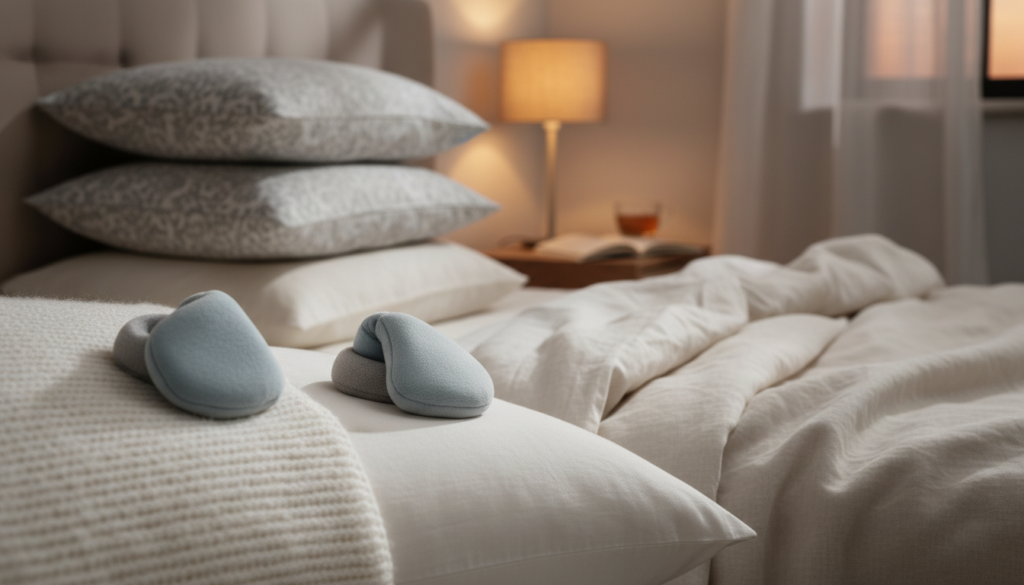
In-ear sleep earbuds and sleep earphones
If you want the smallest setup, in-ear sleep earbuds and sleep earphones are built to sit close to your ear so your pillow doesn’t press on a bulky shell. This style can work for side, back, or stomach sleeping when the housing is truly low-profile and the tips seal well.
The tradeoff is feel. If you dislike anything in your ear canal, you may wake up from pressure or “plugged ear” sensation. For many people, a stable tip and a secure fin are the difference between staying put and shifting at 2 a.m.
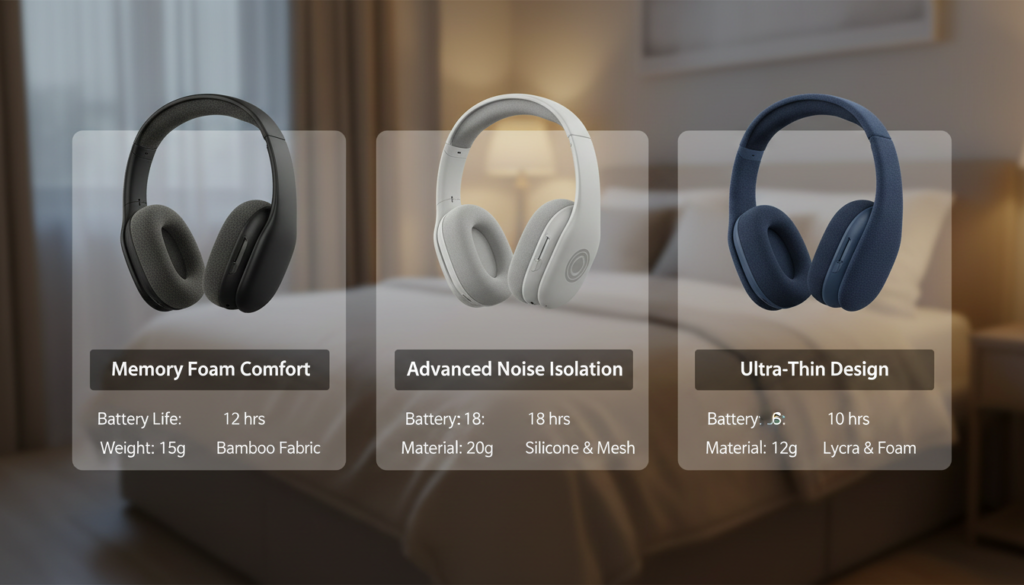
Soft headband headphones and sleep headband headphones
Soft headband headphones place thin speakers inside a fabric band, so nothing sits inside your ear. Sleep headband headphones often feel more forgiving for side sleepers because the pressure spreads across the band instead of pressing on one spot.
They’re also simple for bedtime routines: pull on the band, start a playlist, and you’re set. The main limitation is sound seal. If you need strong blocking, these may not match the effect of noise isolating headphones for sleeping.
Sleep mask with headphones and sleep mask headphones
A sleep mask with headphones combines audio with light control, which can be a big win if streetlights, early sun, or a partner’s screen keeps you up. Sleep mask headphones can also add a little passive muffling just from thicker materials around the face.
Models like the MUSICOZY design use padded eye cups for blackout, but that same padding can run warm over a long night. If you tend to overheat, look for breathable fabric and a mask shape that doesn’t press on your lashes.
When (and when not) to use over-ear noise-canceling headphones for sleep
Over-ear noise canceling can be excellent on planes or in hotels, but it’s rarely the most comfortable option in bed. The earcups can push into your pillow, and the headband can shift when you roll.
If you’re a back sleeper or you mainly need travel relief, a plush set like Bose QuietComfort can feel soft and deliver reliable ANC. If pillow pressure is your top issue, you’ll usually get a better night from a lower-profile style than from full-size cans.
| Style | Best for your sleep setup | Comfort feel | Noise control | Watch-outs |
|---|---|---|---|---|
| In-ear sleep earbuds / sleep earphones | Side sleepers who need a flush fit; travel; shared rooms | Very small on the pillow when the housing is low-profile | Strong seal when tips fit well; closest to noise isolating headphones for sleeping | Some people dislike in-ear pressure; tips can loosen with jaw movement |
| Soft headband headphones / sleep headband headphones | Side sleepers who hate earbuds; people who toss and turn | Gentle, spread-out pressure across fabric | Moderate; depends on speaker placement and band tension | Can shift overnight; louder volumes may leak sound to a partner |
| Sleep mask with headphones / sleep mask headphones | Light-sensitive sleepers; early mornings; naps | Soft around eyes with padded designs | Passive muffling plus audio masking | Can trap heat; fit matters to avoid pressure on nose bridge |
| Over-ear noise-canceling headphones | Back sleeping; flights; hotel rooms with steady hum | Plush ear cushions but bulky in bed | Strong ANC for low rumbles | Uncomfortable under pillow pressure; can slide if you roll |
How We Tested the Best Headphones for Sleeping
Finding comfortable headphones for sleeping is different from choosing regular headphones. Sleep-focused designs must balance comfort, noise reduction, and overnight battery life while remaining comfortable against a pillow.
To identify the best options, we evaluated each model using the following criteria.
Side-Sleeper Comfort
Most people searching for sleep headphones are side sleepers, which creates extra pressure on the ear when resting against a pillow.
We prioritized headphones and earbuds with:
- low-profile designs
- soft materials or fabric headbands
- flush in-ear fit to reduce pressure
Sleep earbuds like Soundcore Sleep A20 and Ozlo Sleepbuds performed well because they sit close to the ear and minimize pillow pressure.
Noise Reduction
Sleep headphones use two main strategies for reducing noise:
- passive isolation from in-ear seals or padded fabrics
- active noise cancelling (ANC) for steady background sounds
Models such as Soundcore Sleep A30 combine ANC with snore masking technology, which can help reduce disruptive bedroom noises like snoring or traffic.
Overnight Battery Performance
Battery life is critical for sleep devices. We looked for models that can last an entire night without interruption, typically between 8 and 14 hours depending on features.
Some sleep earbuds also include charging cases or built-in sleep sounds that extend runtime compared with Bluetooth streaming.
Comfort for Long Listening Sessions
Sleep headphones must remain comfortable for 6–8 hours of continuous use. We examined materials such as breathable fabric headbands, flexible ear tips, and lightweight earbuds designed specifically for nighttime wear.
Headband models like Perytong Sleep Headphones and MUSICOZY Sleep Headphones offer an alternative for people who dislike in-ear pressure.
Sleep-Friendly Features
Finally, we compared features that improve the sleep experience, including:
- built-in sleep sounds
- snore masking
- sleep tracking
- in-ear alarms
- simple touch or app controls
Premium models such as Ozlo Sleepbuds include advanced sleep features that go beyond basic audio playback.
Our Evaluation Process
In addition to reviewing manufacturer specifications, we analyzed user feedback, comfort reports, and real-world usage scenarios to understand how these devices perform during overnight use.
The result is a curated list of sleep headphones designed for side sleepers, shared bedrooms, and people who want a quieter night of rest.
Best Headphones for Sleeping (Detailed Reviews)
Our Top Picks for Sleeping Better
Finding the right sleep headphones depends on your sleeping position, sensitivity to noise, and comfort preferences. Some people need ultra-low-profile sleep earbuds for side sleeping, while others prefer soft headband-style headphones or sleep masks that combine audio with light blocking.
Below are five standout options that cover the most common sleep needs — from sleep earbuds designed for side sleepers to headphones that help reduce snoring noise, plus affordable fabric designs for those who dislike in-ear pressure.
To help you choose the best headphones for sleeping, we tested several options designed for side sleepers, noise reduction, and overnight comfort.
Best Sleep Earbuds for Side Sleepers
🏆 Best Overall
Soundcore Sleep A20
Soundcore Sleep A20 (Top pick for noise isolation + side-sleeper comfort)
The Soundcore Sleep A20 is one of the most well-balanced options for people who sleep on their side. Its tiny, low-profile earbuds sit close to the ear, helping reduce pillow pressure while still creating a secure seal for passive noise isolation.
Rather than relying heavily on processing, the design focuses on a comfortable in-ear fit that helps block steady background noise. Combined with built-in sleep sounds and Bluetooth streaming, it’s a simple and effective solution for overnight listening.
Specs: up to 14 hours playback with preloaded sounds; tiny in-ear design; supports sleep sound playback plus Bluetooth listening
Pros
- very compact design for side sleeping
- strong passive seal helps mask steady noise
- long overnight battery using built-in sounds
Cons
- not true noise-cancelling sleep earbuds
- streaming audio shortens battery life
Best for: side sleepers who want a small, comfortable earbud that quietly reduces background noise.
⭐ Best Premium
Ozlo Sleepbuds (Luxury option with ANC, sleep sounds, and in-ear alarm)
Ozlo Sleepbuds offer a more refined sleep experience, combining a flush in-ear design with a feature-rich sleep audio system. Developed by engineers who previously worked on Bose sleep technology, they focus heavily on comfort and long-term nighttime wear.
Setup is handled through an app that provides sleep sounds, relaxation tracks, and a unique in-ear alarm that wakes you without disturbing others. The earbuds sit close to the ear and are designed to remain comfortable throughout the night.
Specs: ANC; about 10-hour battery; app-based sleep sounds; in-ear alarm
Pros
- polished comfort for extended wear
- ANC combined with audio masking options
- private in-ear alarm for quiet wake-ups
Cons
- significantly more expensive than most sleep earbuds
- app setup adds an extra step before use
Best for: sleepers who want a premium sleep audio system with advanced features.
🌙 Best for Snoring
Best Headphones to Block Snoring
Soundcore Sleep A30 (Smart ANC sleep earbuds with snore masking)
If your biggest challenge is sharing a bedroom with a snoring partner, the Soundcore Sleep A30 offers one of the most targeted solutions. These earbuds combine a sleep-friendly flush fit with smart active noise cancelling and snore masking technology.
The system adapts to changing nighttime noise and works alongside relaxation audio to help reduce disruptions. While battery life is shorter with ANC enabled, the included charging case allows multiple nights of use between charges.
The Sleep A30 uses smart ANC technology designed to reduce background noise while remaining comfortable for sleep. If you’re curious how this technology works, see our beginner’s guide to hybrid ANC technology.
Specs: about 9 hours with ANC on; smart ANC with snore masking; charging case extends total use time
Pros
- targeted masking for snoring and changing noise
- ANC adds another layer beyond passive isolation
- charging case provides extended use
Cons
- ANC reduces runtime compared to passive listening
- achieving a proper ear seal is important for best performance
Best for: shared bedrooms where stronger noise reduction is needed.
💰 Best Budget
Best Budget Sleep Headphones
MUSICOZY Sleep Headphones (Best budget sleep mask headphones)
For sleepers who dislike earbuds, MUSICOZY Sleep Headphones provide a simple and affordable alternative. The design combines a soft sleep mask with integrated Bluetooth speakers, giving you both light blocking and gentle audio playback in one piece.
This design eliminates pressure inside the ear while still allowing you to listen to relaxing audio such as meditation tracks, white noise, or sleep podcasts.
Specs: sleep mask design; about 14-hour battery
Pros
- blocks light while adding passive sound muffling
- no earbud pressure points
- battery lasts through most nights
Cons
- mask design can feel warm for hot sleepers
- not true noise-cancelling headphones
Best for: sleepers who want an inexpensive all-in-one sleep mask and audio solution.
👍 Best Value
Perytong Sleep Headphones (Best value headband option)
Perytong Sleep Headphones take a simpler approach with a soft elastic headband that houses ultra-thin speakers. This design sits comfortably around the head and avoids the pressure points that traditional earbuds can create.
The headband is washable, lightweight, and easy to use, making it a popular choice for people who want comfortable overnight audio without spending much.
Specs: wireless Bluetooth connection; about 10-hour battery life; machine-washable fabric
Pros
- very comfortable headband design
- affordable and easy to use
- washable fabric construction
Cons
sound quality is basic compared with premium earbuds
Best for: budget buyers who want a comfortable, straightforward sleep headphone solution.
How to Choose the Best Headphones for Sleeping
| Product | Best For | Noise Control | Battery | Comfort | Rating | |
|---|---|---|---|---|---|---|
|
🏆 Best Overall Soundcore Sleep A20 |
Side sleepers | Passive isolation | Up to 14h | Ultra-low profile earbuds | ★★★★★ | View Full Review |
|
🌙 Best for Snoring Soundcore Sleep A30 |
Snoring noise | Smart ANC + masking | 9h + case | Flush-fit earbuds | ★★★★☆ | View Full Review |
|
⭐ Best Premium Ozlo Sleepbuds |
Luxury sleep audio | ANC + sleep sounds | 10h | Flush design | ★★★★☆ | View Full Review |
|
💰 Best Budget MUSICOZY Sleep Headphones |
Sleep mask + audio | Passive muffling | 14h | Soft sleep mask | ★★★★☆ | View Full Review |
|
👍 Best Value Perytong Sleep Headphones |
Budget headband option | Passive muffling | 10h | Soft headband | ★★★★☆ | View Full Review |
Price Guide: Budget to Premium Sleep Headphones
The chart below shows how each model compares in price, from budget-friendly sleep headphones to premium sleep earbuds.
$15–$30
$20–$40
$90–$150
$199–$229
$274–$349
What to Look for in Comfortable Headphones for Sleeping as Side Sleepers
Not all sleep headphones are created equal. Here are the most important factors to consider before making a purchase.
Comfort
Comfort is the most important factor. Look for soft fabrics and low-profile speakers that won’t press against your ears while lying on a pillow.
Battery Life
Your headphones should last through the entire night. Most good sleep headphones provide 8–12 hours of battery life.
Bluetooth Connectivity
Wireless Bluetooth headphones are much safer and more convenient for sleeping compared to wired models.
Breathable Materials
Breathable fabric helps prevent overheating during the night.
Noise Isolation
If you want to block out snoring or environmental noise, consider models with better noise isolation.
Are Headphones Safe to Wear While Sleeping?
Sleep headphones can be safe at night, but it depends on how you use them. Bulky gear, loud sounds, and tight earbuds can increase risks. It’s important to keep the pressure low and stay aware of your surroundings.
Start with a safe volume for sleeping. Loud music can harm your hearing over time. It’s easy to turn it up too high in a quiet room. Keep the volume low and use timers to avoid all-night listening.
Ear health can suffer with in-ear designs, if they fit too tightly. Long use and friction can irritate your ear canal. If you feel heat, itching, or soreness, it’s time to take a break.
Sealed earbuds can trap moisture and slow airflow. This can lead to earwax buildup, causing pressure or muffled hearing. Clean your tips often and avoid forcing a deep fit if you’re prone to buildup.
If you dislike the “plugged” feeling, it might be the occlusion effect. Breathable or perforated ear tips can help, but they block less sound. You’ll need a lower volume and calmer music to stay comfortable.
- Choose sleep headphones built for low-profile comfort, so your pillow doesn’t press hard on your ear.
- Skip wired sets overnight when possible; cords can tangle and create a strangulation risk.
- Use sleep safety tips that protect awareness: lighter isolation, one earbud, or lower volume if you need to hear alarms or a child.
- Remove your gear if you notice pain, pressure, ringing, or skin irritation, and talk with your clinician if symptoms don’t clear.
| Risk to watch | Why it happens | What to do tonight | What to change long-term |
|---|---|---|---|
| Hearing strain | Volume creeps up during long sessions | Set a lower safe volume for sleeping and use a sleep timer | Use preloaded masking tracks instead of streaming all night |
| Outer ear irritation | Friction and pressure in the ear canal | Stop if you feel soreness or heat | Switch to softer tips or a headband style to support ear health |
| Earwax buildup | Tight seals reduce airflow and trap wax | Wipe tips and avoid deep insertion | Rotate tips and take rest nights to keep ear health steady |
| Occlusion effect | Sealed fit amplifies internal body sounds | Try breathable tips at the same volume | Use less-sealing tips when you don’t need maximum blocking |
| Tangling hazards | Wired cords twist as you shift positions | Don’t use wired headphones in bed | Pick wireless sleep headphones with flat, soft housings |
| Low awareness | Strong isolation masks alarms and voices | Lower volume and choose calmer sounds | Use less-isolating tips if you need to hear key alerts |
Tips for Sleeping Comfortably With Headphones
Getting a good night’s sleep with headphones is all about fit, battery life, and sound masking. With a few simple changes, your headphones can feel like they’re not even there, even when you move around.
Choose low-profile styles
If you sleep on your side, look for earbuds that fit flush or soft fabric bands. Headband headphones spread out the pressure, making them more comfortable against your pillow.
For a light feel, go for tiny earbuds like the Soundcore Sleep A20 or A30. They sit closer to your ear than regular buds. Soft headband headphones also help avoid hot spots on your ear cartilage.
Keep volume low and mask strategically
Keep the volume low so you can hear important sounds like a smoke alarm. Choose a masking sound that matches the noise bothering you, like a snore or a whine.
In the Soundcore app, try different masking sounds. Stick with the one that covers the noise without being too loud. If ringing bothers you, try matching it with a specific sound to make it less annoying.
Use preloaded sounds or timers to prevent all-night streaming drain
Streaming all night can drain your earbuds’ batteries fast. It can also drop out if your phone moves. Use preloaded tracks to keep playback steady without needing a constant connection.
With Soundcore Sleep A20, preloaded sounds last longer than streaming. Stream while you relax, then switch to onboard sounds or set a timer. This helps save battery for the morning, which is great for noise isolating headphones you use every night.
Reduce ear pressure and occlusion
If your ears hurt or feel plugged, try changing one thing at a time. This could be the tip size, wing size, or pillow firmness. Even small earbuds can feel bigger on a firm pillow, so a softer pillow or a cutout pillow can help.
Try different silicone tips for a better seal, then adjust the wings so the bud doesn’t twist. If you don’t like the boomy sound, breathable or perforated tips might help. But they can also reduce sound isolation, something to consider if you switch between headband and earbuds.
Sleep Headphones vs White Noise Machines: Which Helps You Sleep Better?
If you’re woken up by snoring, street noise, or TV, you have two options. You can choose sleep headphones or white noise machines. The right choice depends on the noise, how much gear you like in bed, and how alert you need to stay.
When sleep headphones win
Sleep headphones are great for controlling sound in noisy places like homes, hotels, or apartments. They’re also good for shared bedrooms because they can block out your partner’s snoring without filling the room with sound.
For low, steady noises, noise cancelling headphones can reduce the sound before adding a masking track. But for sharp, random noises like door slams or footsteps, earbuds block more because of their fit and seal.
When a white noise machine wins
White noise machines are better for comfort. They don’t put pressure on your ears, don’t need cleaning, and are less likely to irritate sensitive ears. Plus, they let you hear important sounds more easily.
In a shared room, you can keep the volume low and place the machine far from your bed. Some models even have a headphone jack for a private listening experience without changing your routine.
Hybrid setups
A hybrid approach can be very flexible. You can run a white noise machine at a low level in the room. Then, use one earbud to mask louder noises. This way, you can hear alarms or a child calling more easily.
Another option is to plug sleep headphones into the machine’s headphone jack. This keeps your sound consistent and avoids distractions from apps. If using noise cancelling headphones, keep the volume low and focus on a secure, comfortable fit.
| Situation in your room | Sleep headphones | White noise machines | Hybrid approach |
|---|---|---|---|
| Partner snoring next to you | Personal masking without changing your partner’s sleep | May bother a partner who prefers silence | Low room noise + one earbud for the snore side |
| Roommates, thin walls, late-night chatter | Better privacy and stronger direct masking | Helps soften voices but won’t isolate you | Room sound for baseline + earbud for spikes |
| Travel: hotels, planes, new sounds | Portable, consistent routine on the go | Less portable; depends on packing space | Earbud on the loud side + low room sound if available |
| You dislike pressure in your ears | May feel annoying after hours, even with soft tips | No ear contact, often the easiest on the body | Room sound first, then earbud only if needed |
| You want higher awareness for alarms or kids | Can reduce awareness, even with a tight seal | Usually easier to stay aware of your space | One earbud + room sound to keep cues audible |
Best Audio Content to Listen to While Sleeping
Your playlist is as important as your headphones. With acoustic sleep headphones, you can listen at a low volume. This way, you get clear sounds that don’t wake you up. Start with simple tracks and adjust as needed to block out noises like voices or traffic.
White noise, pink noise, and brown noise for masking
Noise “colors” are steady sounds that mask sudden changes in your room. White noise is bright, pink noise is softer, and brown noise is deeper. SoundOff Noise Masking Earbuds introduced pink noise as a sleep aid, a good starting point.
Using a sleep mask like MUSICOZY? Stick to ambient sounds, not detailed music. These sounds hide distractions without needing loud volume. This keeps your headphones comfortable all night.
Rain sounds, ocean, and nature soundscapes for relaxation
Nature sounds work best when they feel real, not sharp. Soundcore Sleep A20 balances thunder and rain sounds well. Ocean loops are also easy to choose for a steady sound.
Start with a 30–60 minute timer. It helps you see if continuous sounds keep you asleep or wake you up.
Meditation music and whisper-level sleep stories (test clarity at low volume)
Meditations and sleep stories need to be clear at a whisper. In testing, clear spoken words at whisper levels are key. Soundcore Sleep A30 keeps meditation clear, so you don’t need to turn up the volume.
Choose tracks with slow pacing and less sparkle. This keeps the narrator’s voice clear without masking sounds.
Sleep podcasts and spoken-word content (choose balanced tuning to avoid harsh highs)
Podcasts are great for keeping your mind engaged. But harsh sounds can get annoying. Look for balanced tuning to avoid piercing highs. Soundcore Sleep A20 is balanced and offers EQ options to tame sharp treble.
Use a short episode and a sleep timer. This ensures your bedtime audio ends cleanly, without streaming all night.
| What you play | What it’s good for | How to set it up on your best headphones for sleep | Quick tip to keep it comfortable |
|---|---|---|---|
| White noise | Blocking TV bleed, hallway chatter, and inconsistent hums | Low volume, steady level; keep EQ neutral | If it feels “sharp,” switch to pink noise |
| Pink noise | Smoother masking sounds that don’t feel as bright | Start here if you’re sensitive to treble | Use a timer so loops don’t restart loudly |
| Brown noise | Deeper coverage for bassy rumbles like trucks or HVAC | Trim bass if it feels pressurized in-ear | Pair with a snug, low-profile fit to prevent leaks |
| Rain + thunder | Relaxation with gentle detail and a “cozy” backdrop | Pick high-quality tracks; avoid harsh cymbal-like hiss | Balanced tuning helps thunder stay warm, not boomy |
| Ocean soundscapes | Consistent rhythm that’s easy to ignore | Choose long tracks with minimal wave “crash” spikes | Lower volume until waves fade into the room |
| Whisper stories or guided meditation | Reducing racing thoughts with simple prompts | Test clarity at whisper levels before you commit | If you strain to hear, swap tracks instead of turning up |
| Sleep podcasts | Light focus that eases you into drowsiness | Use speech-focused EQ to avoid harsh highs | Set a sleep timer so playback doesn’t run all night |
Frequently Asked Questions About Headphones for Sleeping
What are the best headphones for sleeping if you’re a side sleeper?
Side sleepers should choose low-profile sleep earbuds or soft headband sleep headphones. These designs sit comfortably against the pillow and reduce pressure on the ears during the night. Models like Soundcore Sleep A20 are popular because they combine comfort and noise isolation.
Do noise-canceling headphones work for sleeping next to a snoring partner?
Noise-canceling headphones can help with steady background noise, but snoring changes in pitch and volume. A combination of passive noise isolation and audio masking such as white noise often works best.
Are regular earbuds or over-ear headphones comfortable for sleeping?
Most regular earbuds and over-ear headphones are not designed for sleeping. They can create pressure points when lying on a pillow. Sleep headphones use soft materials and low-profile speakers for better overnight comfort.
What are the three main types of sleep headphones?
The three common types are sleep earbuds, headband sleep headphones, and sleep mask headphones. Each type offers different levels of comfort and noise isolation.
Are sleep headphones safe to wear all night?
Sleep headphones can be safe if used responsibly. Keep the volume at a moderate level and choose models designed for sleeping.
How long do wireless sleep headphones last on a single charge?
Most sleep headphones provide between 8 and 14 hours of battery life depending on features such as Bluetooth streaming or active noise cancelling.
Should you choose passive noise isolation or ANC for bedroom noise?
Passive noise isolation works well for intermittent sounds like snoring, while ANC performs better with steady background noise such as traffic or fans.
Conclusion
Choosing headphones for sleeping is all about comfort. Side sleepers need earbuds or bands that fit snugly. This way, you can enjoy your sleep without any discomfort.
For those who want to block out noise, the Soundcore Sleep A20 is a great choice. It has strong passive isolation and long battery life. If you’re dealing with snoring, the Soundcore Sleep A30 is perfect with its noise-cancelling feature.
For a simple solution, MUSICOZY offers sleep mask headphones. They block light and add a touch of comfort to your sleep. For a more advanced option, Ozlo Sleepbuds provide ANC and an in-ear alarm without feeling bulky.
Remember, keep the volume low and focus on a good seal. This ensures you sleep well without waking up to loud sounds. Also, consider safety features like alarms or emergency awareness, even with noise-cancelling headphones.